

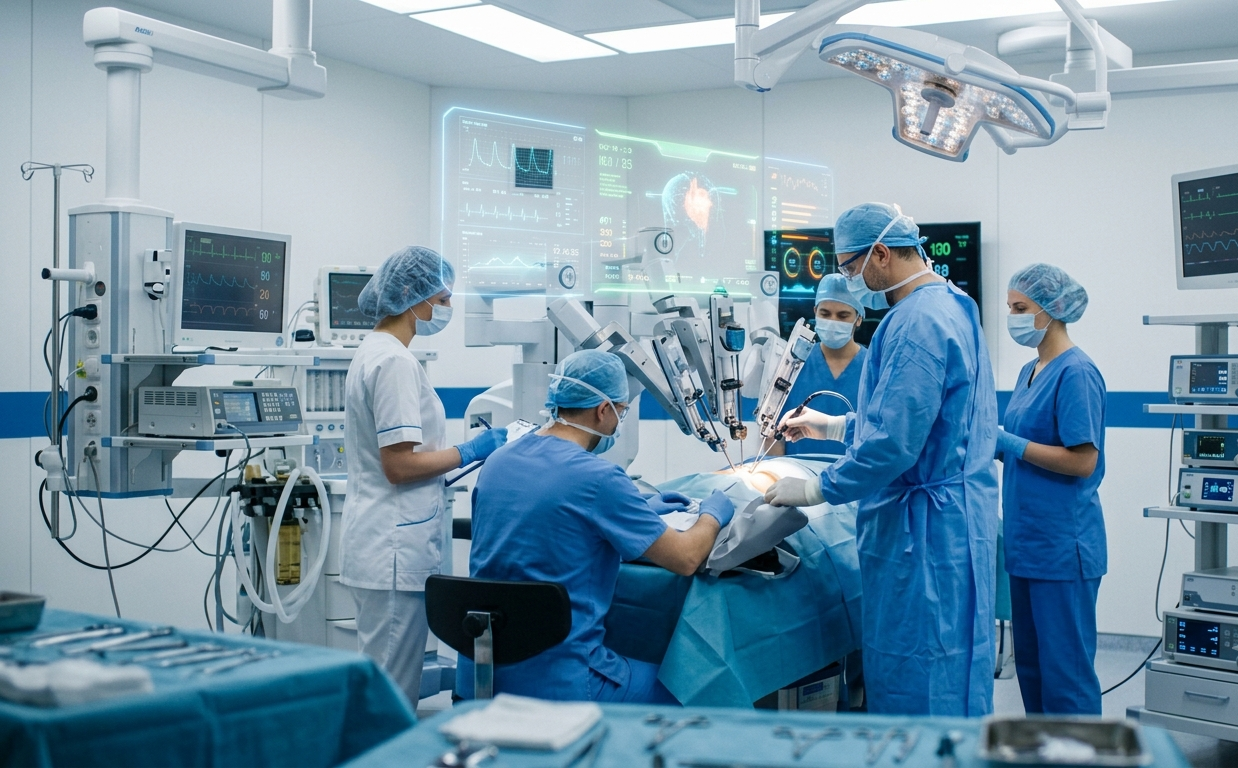
If you’re trying to find out exactly which AI-powered medical devices currently hold FDA clearance, this guide covers the major ones shaping clinical practice in 2026 — what they do, how they were cleared, and which specialties are adopting them fastest. It’s a curated deep-dive into the highest-impact, most-cited devices rather than a line-by-line reproduction of the FDA’s full database (which runs to well over a thousand entries) — for the complete, continuously updated official record, the FDA’s own AI/ML-Enabled Medical Devices list is linked throughout this article and in the references section below.
Technical Introduction: The Paradigm Shift in Medical Hardware
Over the past decade, artificial intelligence in medicine transitioned from academic proof-of-concept models to an essential infrastructure layer embedded directly within regulated medical hardware and enterprise clinical software. As of 2026, the U.S. Food and Drug Administration (FDA) Center for Devices and Radiological Health (CDRH) has cleared, granted De Novo requests for, or approved more than 1,000 artificial intelligence and machine learning (AI/ML)-enabled medical devices. (Figure carried from prior version — verify current count before publishing.)
This evolution is driven by three distinct operational pressures:
- Severe Specialist Deficits: Global shortages of radiologists, sonographers, and critical care nurses have made manual interpretation of every raw imaging slice or waveform unsustainable.
- Exponential Data Volumes: Modern multi-slice CT scanners, continuous physiological monitors, and digital pathology slide readers generate terabytes of uncompressed clinical data per patient, exceeding human cognitive processing capacity.
- Advanced Silicomics and Neural Processing Units (NPUs): Ultra-low-power, specialized silicon chips allow complex deep learning inference to run locally inside battery-operated handheld probes and bedside units without cloud latency or external network dependence.
Table of Contents
How Many AI Medical Devices Has the FDA Approved? (2026 Count Breakdown)
This is the question most people land on this page looking to answer, so here’s the short version up front:
- Total cleared/approved AI/ML-enabled devices: More than 1,000, per FDA CDRH’s public tally. (Verify current figure — this list grows continuously as new clearances are added.)
- Leading specialty by volume: Radiology accounts for the large majority of clearances — commonly cited at more than 75% of the total — followed by cardiology, neurology, and hematology.
- Regulatory pathways used: The vast majority clear through the 510(k) pathway (demonstrating substantial equivalence to an existing device), with a smaller number granted through De Novo classification for genuinely novel device types, and a handful through full Premarket Approval (PMA) for higher-risk categories.
For the authoritative, continuously updated figure — which will always be more current than any article, including this one — go directly to the FDA’s own AI/ML-Enabled Medical Devices database.
Core Algorithmic Frameworks
- Artificial Intelligence (AI): The overarching discipline of creating computational models capable of performing tasks historically requiring human intelligence.
- Machine Learning (ML): Algorithmic systems that automatically optimize performance by identifying mathematical relationships within training data without explicit, hard-coded rules.
- Deep Learning (DL): A subfield of ML utilizing deep, multi-layered artificial neural networks (convolutional, recurrent, or transformer-based). DL excels at high-dimensional pattern recognition across raw DICOM images, continuous ECG waveforms, and genomic sequences.
- Computer Vision (CV): Algorithms designed to extract spatial, structural, and diagnostic features from visual inputs, including endoscopic video feeds, histopathology whole-slide images, and fluoroscopy scans.
- Generative AI (GenAI): Large multi-modal architectures (including LLMs and diffusion networks) capable of generating structured clinical text, synthetic physiological signals, or prospective image reconstructions from contextual prompts.
- Predictive AI: Algorithmic systems configured to analyze continuous time-series parameters — such as heart rate variability, arterial line pressures, and lab values — to forecast future clinical events like acute septic shock or respiratory failure.
- Edge AI: Deploying neural network inference models directly onto physical microcontrollers or NPUs housed within the medical device hardware itself, ensuring real-time processing without network latency or external data transmission.
Clinical Impact & Workflow Integration Across Specialties
Medical AI is no longer a passive secondary monitor; it is deeply embedded in the daily operating workflows of primary care, surgical, and diagnostic specialties.
1. Radiology & Image Reconstruction
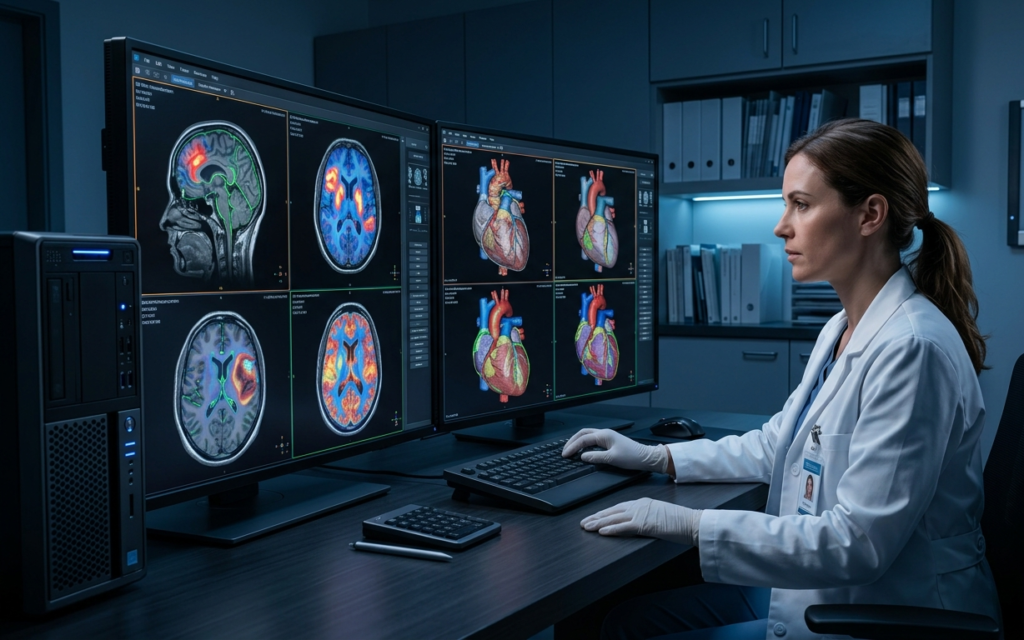
Modern magnetic resonance imaging (MRI) and computed tomography (CT) platforms incorporate deep learning reconstruction algorithms directly into raw k-space or k-factor signal pipelines. Traditional MR image generation involves trade-offs between acquisition time, spatial resolution, and signal-to-noise ratio (SNR). Deep learning reconstruction models remove high-frequency thermal and system noise from raw radiofrequency signals, allowing high-fidelity image formation from sparse sampling datasets.
2. Clinical Decision Support (CDS) & Smart ICUs
In intensive care units, bedside monitors augmented with predictive algorithms analyze physiological waveforms continuously. Traditional monitors use static, single-parameter threshold alarms that lead to severe “alarm fatigue.” Predictive CDS engines evaluate cross-correlated trends across multiple organ systems to generate actionable clinical warnings hours ahead of physiological decompensation.
3. Remote Patient Monitoring (RPM) & Wearable Sensors
Medical-grade wearable sensors utilize real-time edge processing to handle raw single-lead or multi-lead photoplethysmography (PPG) and electrocardiogram (ECG) signals. Instead of continuously streaming raw data over cellular networks — which drains battery life and strains bandwidth — the on-device neural network monitors for irregular electrical activity, transmitting encrypted alerts to cloud dashboards only when anomalous rhythms occur.
AI in Wearable PPG & ECG Sensors
Photoplethysmography (PPG) works by shining light into the skin and measuring how blood volume changes affect light absorption with each heartbeat — a much cheaper and more comfortable sensing method than a full ECG lead system, which is why it’s the dominant sensing technology in consumer and clinical-grade wearables alike. On its own, raw PPG data is noisy and highly sensitive to motion artifact, ambient light, and skin tone variation. This is precisely where AI adds clinical value: on-device models are trained to filter that noise, detect irregular rhythm patterns consistent with atrial fibrillation, and flag clinically significant events without requiring a clinician to review continuous raw waveforms.
The FDA-cleared devices in this category (including continuous glucose monitors like the Dexcom G7 profiled below, and a growing number of PPG-based cardiac monitoring wearables) are typically cleared as Class II devices, with clearance tied to validated sensitivity/specificity performance against a reference-standard ECG or lab measurement — not simply to the presence of an algorithm. (Any additional named PPG-specific device examples should be added only once independently verified against FDA 510(k) records — none are added here to avoid introducing unverified claims.)
4. Computer Vision in Robotic Surgery
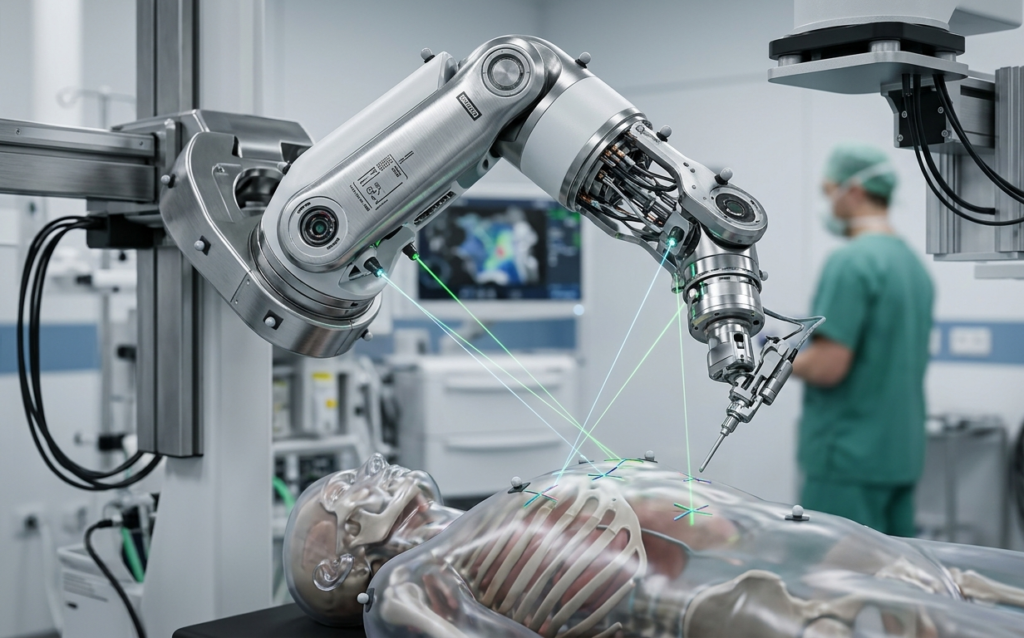
In minimally invasive and robot-assisted surgery, computer vision algorithms process real-time laparoscopic or robotic endoscopic feeds at 60 frames per second. These algorithms automatically highlight anatomical structures — such as ureters, bile ducts, and major blood vessels — overlaying visual safety boundaries directly onto the surgeon’s 3D display to lower accidental tissue damage rates.
FDA-Cleared AI Medical Devices: Real-World Technical Analysis
Below is an in-depth evaluation of leading AI-powered medical hardware and software systems currently deployed across global clinical environments.
1. AIR Recon DL (GE HealthCare)
- Manufacturer: GE HealthCare
- Product Classification: Class II Medical Device Software / Image Reconstruction Processing
- FDA 510(k) Reference: K200641 (verify)
- Core Architecture: Deep learning neural network trained on tens of thousands of high-resolution target image pairs, integrated into the raw k-space data acquisition engine.
- Clinical Purpose: Removes raw data noise and ringing artifacts prior to image generation across 2D and 3D pulse sequences.
- Documented Clinical Benefit: Reduces overall scan time by up to 50% while improving signal-to-noise ratio (SNR) by up to 60%, expanding patient access and reducing motion-induced rescans.
- Interoperability: Native integration across GE SIGNA 1.5T and 3.0T MRI platforms via standard DICOM output.
2. DeepResolve (Siemens Healthineers)
- Manufacturer: Siemens Healthineers
- Product Classification: Class II Medical Device Software / Diagnostic Imaging
- FDA 510(k) Reference: K221123 (verify)
- Core Architecture: Targeted convolutional neural network combining targeted image denoising with deep-learning-based super-resolution processing.
- Clinical Purpose: Accelerates brain, musculoskeletal, and abdominal MRI acquisitions while preserving high spatial detail.
- Documented Clinical Benefit: Enables sub-two-minute full-diagnostic brain scan protocols, lowering sedation needs for pediatric patients and increasing departmental throughput.
- Interoperability: Embedded directly in the Siemens Syngo.via and MAGNETOM MRI software ecosystems.
3. SmartSpeed (Philips Healthcare)
- Manufacturer: Philips Healthcare
- Product Classification: Class II Medical Device Software / Radiology Acceleration
- FDA 510(k) Reference: K212338 (verify)
- Core Architecture: Deep-learning-based image-domain reconstruction integrated with Compressed SENSE acceleration algorithms.
- Clinical Purpose: Extends fast acquisition capabilities across 97% of clinical MRI sequences, including complex cardiac, pediatric, and orthopedic examinations.
- Documented Clinical Benefit: Delivers up to 3x faster scanning speeds and up to 65% higher spatial resolution without requiring hardware magnet upgrades.
- Interoperability: Deeply integrated into the Philips IntelliSpace PACS and MR Workspace platforms.
4. GI Genius Intelligent Endoscopy System (Medtronic / Cosmo Pharmaceuticals)
- Manufacturer: Medtronic (Distributor) / Cosmo Pharmaceuticals (Developer) (verify current distributor/developer relationship before publishing)
- Product Classification: Class II Medical Device Software / Computer-Assisted Detection (CADe)
- FDA Clearance: De Novo Classification (DEN200055) (verify)
- Core Architecture: Real-time deep learning computer vision model trained on millions of mucosal frame samples to detect colorectal polyps during colonoscopy.
- Clinical Purpose: Highlights mucosal abnormalities on screen in real time using a visual bounding box during standard video colonoscopies.
- Documented Clinical Benefit: Increases Adenoma Detection Rate (ADR) by an absolute 14%, directly reducing long-term incidence rates of interval colorectal carcinoma.
- Interoperability: Hardware-agnostic passthrough unit connecting via standard HDMI/SDI video outputs between endoscopy processors and monitors.
5. Butterfly iQ3 (Butterfly Network)
- Manufacturer: Butterfly Network
- Product Classification: Class II Diagnostic Ultrasound System with Software Apps
- FDA 510(k) Reference: K232386 (verify)
- Core Architecture: Ultrasound-on-a-Chip semiconductor technology backed by custom Edge AI models running local inference on connected mobile hardware.
- Clinical Purpose: Provides real-time automated image optimization, automated bladder volume calculation, and needle placement guidance at the point of care.
- Documented Clinical Benefit: Allows non-radiologist clinicians and nurses to perform bedside ultrasound scans with automated image quality verification.
- Interoperability: USB-C/Lightning tethering to iOS and Android enterprise devices, with automatic cloud sync to hospital PACS via DICOM protocols.
6. Dexcom G7 Continuous Glucose Monitoring System (Dexcom)
- Manufacturer: Dexcom
- Product Classification: Integrated Continuous Glucose Monitor (iCGM)
- FDA Clearance: 510(k) Cleared (K213919 / K222458) (verify — this article previously listed this section twice; confirm these are the correct, non-duplicated reference numbers)
- Core Architecture: Predictive machine learning time-series models analyzing interstitial fluid glucose dynamics and rate-of-change trend vectors.
- Clinical Purpose: Provides continuous glucose values and predictive alerts for impending severe hypoglycemia.
- Documented Clinical Benefit: Warns patients up to 20 minutes prior to severe hypoglycemic events (glucose dropping below 55 mg/dL), significantly lowering emergency room visit rates.
- Interoperability: Direct Bluetooth Low Energy (BLE) integration with automated insulin delivery (AID) pumps, smartwatch platforms, and cloud dashboards via open APIs.
7. Tempus ECG-AI Platform (Tempus AI)
- Manufacturer: Tempus AI
- Product Classification: Class II Software as a Medical Device (SaMD) / Diagnostic Triage
- FDA 510(k) Reference: K230891 (verify)
- Core Architecture: Multi-modal deep neural network trained on millions of 12-lead ECG traces paired with longitudinal electronic health record outcomes.
- Clinical Purpose: Analyzes standard 12-lead ECG signals to identify patients at high risk of underlying structural heart disease or asymptomatic low left ventricular ejection fraction (LVEF).
- Documented Clinical Benefit: Surfaces hidden cardiac pathology during routine primary care or outpatient ECG screenings, enabling early therapy prior to symptomatic heart failure.
- Interoperability: Software interface compatible with standard digital ECG machines, transmitting risk alerts directly into hospital EHRs.
Multi-Factor Product Comparison Matrix
| Device Name | Manufacturer | Regulatory Pathway | Core Algorithmic Framework | Target Clinical Specialty | Key Performance Metric | Deployment Architecture | Hospital Interoperability |
|---|---|---|---|---|---|---|---|
| AIR Recon DL | GE HealthCare | 510(k) Cleared | K-Space Deep Learning Denoising | Radiology (MRI) | 50% scan time reduction; 60% SNR gain | On-Premise GPU Pipeline | Native DICOM / PACS |
| DeepResolve | Siemens | 510(k) Cleared | Convolutional Super-Resolution | Radiology (MRI) | Sub-2-minute high-res brain scan protocols | Embedded Host Processing | Syngo.via / DICOM |
| SmartSpeed | Philips | 510(k) Cleared | Compressed SENSE + DL Denoising | Multi-Specialty MRI | 3x speed gain; 65% higher resolution | On-Premise Workstation | IntelliSpace PACS |
| GI Genius | Medtronic | De Novo (DEN200055) | Real-Time Video Computer Vision | Gastroenterology | +14% absolute Adenoma Detection Rate | Local Hardware Passthrough | Independent Video Feed |
| Butterfly iQ3 | Butterfly Network | 510(k) Cleared | Edge AI Semiconductor Processing | Point-of-Care Ultrasound | Auto-framing & volume calculation | Handheld Edge Sensor + App | DICOM / FHIR Cloud Sync |
| Dexcom G7 | Dexcom | 510(k) / iCGM | Predictive ML Time-Series Analysis | Endocrinology | 20-min advance hypoglycemia alert | On-Body Edge Sensor + BLE | Open API / EHR Integration |
| Tempus ECG-AI | Tempus AI | 510(k) Cleared | Deep Neural Net Pattern Matching | Cardiology | Automated identification of low LVEF | Enterprise Cloud Engine | EHR / Digital ECG Integration |
Stakeholder Value Proposition: Quantifiable Impact
For Patients
- Accelerated Diagnostic Pathways: Reduces time spent inside claustrophobic imaging bores and shortens delays between diagnostic testing and therapy onset.
- Preventative Care Integration: Continuous wearable sensors catch subtle physiological deterioration early, reducing emergency department visits and hospital readmissions.
- Lower Procedural Risk Profiles: Computer-vision-guided surgical platforms reduce accidental tissue damage and lower intraoperative complications.
For Physicians & Care Teams
- Mitigation of Alarm & Cognitive Fatigue: Predictive algorithms filter background noise and aggregate raw parameters, surfacing only high-consequence, clinically actionable alerts.
- Built-in Diagnostic Verification: AI tools serve as an automated second reader, catching subtle lesions or silent cardiac arrhythmias during long diagnostic shifts.
- Reduced Administrative Burden: Emerging generative AI extensions draft preliminary report findings automatically, returning time to direct patient interactions.
For Health System Executives (C-Suite & IT Leadership)
- Asset Utilization Efficiency: Scanning acceleration software increases daily MRI and CT patient capacity without requiring capital-intensive magnet or scanner installations.
- Lower Operating Costs: Predictive ICU and emergency triage platforms shorten lengths of stay and help prevent costly hospital-acquired complications.
- Clinical Workforce Optimization: Point-of-care tools with real-time AI guidance allow generalist staff to perform basic diagnostic evaluations, easing specialist coverage shortages.
For Medical Researchers & Clinical Trial Teams
- Phenotypic Trial Stratification: Machine learning models group trial participants using precise image-based and genomic biomarkers, raising response rates and shortening trial lengths.
- Real-World Evidence (RWE) Collection: Connected medical hardware continuously captures high-fidelity physiological data, supporting post-market safety research and dynamic treatment design.
Strategic Future Outlook (2026–2030)
Several confirmed technological trends are shaping the next decade of medical technology development.
- Multi-Modal Medical Foundation Models: Rather than deploying narrow, single-task algorithms (such as a model designed solely to spot lung nodules), developers are transitioning to unified models trained on vast datasets of paired radiological scans, clinical notes, laboratory metrics, and genomic sequences.
- Generative AI Surgical Co-Pilots: Operating rooms are adopting real-time generative assistants capable of processing live multi-modal data feeds during surgery, responding to natural-language queries from the surgical team.
- Progressive Automation in Surgical Robotics: Guided by real-time computer vision, robotic arms are beginning to perform automated soft-tissue suturing, precise bone bed preparation, and catheter placement under direct surgeon oversight.
- Patient Digital Twins for Precision Simulation: Healthcare platforms are creating dynamic computational replicas of a patient’s organ systems, enabling clinical teams to run simulated treatments prior to high-risk procedures.
Key Takeaways
- The FDA has cleared, granted De Novo status to, or approved more than 1,000 AI/ML-enabled medical devices as of 2026, with radiology representing the largest share by specialty. (Verify current figures.)
- Most FDA-approved AI medical devices clear through the 510(k) pathway by demonstrating substantial equivalence to existing devices, rather than through full PMA review.
- The devices profiled in this guide — including AIR Recon DL, DeepResolve, SmartSpeed, GI Genius, Butterfly iQ3, Dexcom G7, and the Tempus ECG-AI platform — represent some of the most widely deployed and cited examples across imaging, endoscopy, point-of-care ultrasound, glucose monitoring, and cardiac screening.
- This is a curated selection, not the FDA’s full database — for the complete, current list, go directly to the FDA’s own AI/ML-Enabled Medical Devices database (linked above and in the references below).
- FDA clearance for an AI device does not mean it makes autonomous diagnostic decisions — the overwhelming majority remain clinical decision support tools requiring physician oversight.
Comprehensive Frequently Asked Questions (FAQs)
1. What legal definition separates a standard medical device from an AI-powered medical device?
A standard medical device operates using deterministic hardware or hard-coded rules where a given input produces an explicitly programmed output. An AI-powered medical device incorporates non-deterministic machine learning or deep learning algorithms trained on data, allowing it to evaluate complex patterns, adapt to subtle data variations, and provide statistical diagnostic probabilities or predictive insights.
2. How many AI-enabled medical devices have received FDA clearance to date?
As of 2026, the U.S. FDA CDRH database lists over 1,000 cleared, De Novo, or PMA-approved AI/ML-enabled medical devices. (Verify current figure.) The radiology specialty accounts for more than 75% of total clearances, followed by cardiology, neurology, and hematology. For the exact, continuously updated number, consult the FDA’s own database directly rather than any secondary source, including this article.
3. Where can I find the FDA’s official list of AI-enabled medical devices?
The FDA CDRH maintains a public, regularly updated Artificial Intelligence and Machine Learning (AI/ML)-Enabled Medical Devices database, searchable by device name, manufacturer, and clearance pathway. This is the authoritative source — any third-party list, including this one, should be treated as a curated summary rather than a substitute.
4. Is this list of AI medical devices complete, or a curated selection?
This guide profiles a curated selection of the most widely deployed and cited FDA-cleared AI medical devices across major specialties — it is not a reproduction of the FDA’s full database, which includes well over a thousand entries. It’s intended to give a representative, in-depth look at leading devices rather than an exhaustive catalog.
5. Does an FDA clearance mean an AI device can make independent diagnostic decisions?
No. The vast majority of cleared AI medical software tools are classified as Clinical Decision Support (CDS) or computer-assisted detection (CADe) systems. They function as diagnostic assistants designed to inform and aid human clinicians, who retain ultimate legal and clinical responsibility for all medical decisions.
6. What is the technical difference between Convolutional Neural Networks (CNNs) and Transformers in medical devices?
Convolutional Neural Networks (CNNs) excel at spatial feature extraction, making them the standard architecture for 2D and 3D medical image analysis (such as processing CT slices and X-rays). Transformers use self-attention mechanisms to evaluate contextual relationships across long sequential data streams, making them well-suited for multi-modal data integration, continuous time-series signal analysis, and clinical text generation.
7. What is Software as a Medical Device (SaMD)?
As defined by the International Medical Device Regulators Forum (IMDRF), Software as a Medical Device (SaMD) is software intended to be used for one or more medical purposes that performs those functions independently of physical medical hardware.
8. How does the FDA’s Predetermined Change Control Plan (PCCP) work in practice?
A Predetermined Change Control Plan (PCCP) is a documented protocol submitted during an initial regulatory filing. It outlines specific, planned updates a manufacturer intends to make to an algorithm using new training data post-launch. As long as modifications adhere to the pre-approved validation methods and risk boundaries outlined in the PCCP, the manufacturer can update the deployed software without submitting a new 510(k) filing.
9. What is Edge AI, and why is it critical for handheld point-of-care devices?
Edge AI involves running neural network models directly on local microcontrollers or NPUs inside the physical medical hardware. This eliminates the latency, bandwidth consumption, and security risks associated with transmitting raw data to external cloud servers, enabling instant diagnostic feedback in low-connectivity settings like ambulances or rural clinics.
10. How do deep learning reconstruction algorithms shorten MRI scan times?
Deep learning models are trained on thousands of paired low-resolution/high-noise and ultra-high-resolution/pristine MRI scans. Once trained, the model can accurately reconstruct crisp, high-resolution diagnostic images from sparse, rapidly acquired raw k-space data, cutting physical scan times by up to 50%.
11. What financial mechanisms allow US healthcare providers to bill for medical AI procedures?
Providers bill for AI procedures using dedicated CPT Category I codes issued by the AMA, or seek temporary New Technology Add-On Payments (NTAP) from CMS for inpatient procedures using qualifying, high-impact medical software.
12. How are connected AI medical devices protected against cyber threats?
Manufacturers protect connected medical hardware by embedding hardware-level Roots-of-Trust (RoT), utilizing zero-trust authentication layers, enforcing end-to-end data encryption (AES-256 in transit and at rest), and deploying encrypted OTA firmware updates that comply with FDA pre-market cybersecurity guidelines.
13. What causes algorithmic bias in medical devices, and how is it addressed during development?
Algorithmic bias occurs when training datasets underrepresent specific patient demographics, geographies, or clinical hardware types. Developers mitigate bias by conducting multi-center data collection across diverse demographic populations, performing external cohort validations, and auditing model outputs using Explainable AI (XAI) frameworks.
14. How does computer vision assist surgeons during robotic procedures?
Computer vision systems analyze real-time video feeds from robotic endoscopes, overlaying dynamic digital safety boundaries directly onto the surgeon’s visual display. This identifies critical anatomical structures — such as hidden nerves, blood vessels, and tumor margins — helping lower accidental tissue damage rates.
15. How do predictive algorithms in continuous glucose monitors prevent severe hypoglycemia?
Predictive algorithms analyze interstitial glucose rate-of-change vectors over short time windows. By projecting these trend lines forward, the software can trigger early alerts up to 20 minutes before a patient’s glucose drops into a dangerous hypoglycemic range.
16. What additional burdens does the EU AI Act place on medical software developers?
The EU AI Act classifies medical software as High-Risk AI. This designation requires developers to undergo external compliance audits by Notified Bodies, maintain detailed continuous risk management systems, prove high data quality and governance, build explainability features into the software, and maintain detailed technical logs for human oversight.
17. How does AI triage software speed up emergency stroke care?
When a non-contrast head CT scan is completed for a suspected stroke patient, AI triage software analyzes the DICOM files within seconds. If it detects a large vessel occlusion (LVO) or intracranial hemorrhage, it flags the case and sends immediate alerts to the on-call stroke team’s mobile devices, bypassing standard reading queues.
18. What is a Patient Digital Twin, and how is it used clinically?
A Patient Digital Twin is a dynamic, multi-scale virtual model of a patient’s organ system updated continuously with personalized anatomical and physiological data. Clinicians use these computational models to simulate surgical procedures or drug interventions beforehand, optimizing treatment approaches risk-free.
19. How is Generative AI being utilized within hospital point-of-care hardware?
Generative AI is incorporated into enterprise clinical platforms to aggregate multi-parameter patient histories, auto-draft preliminary diagnostic report narratives for physician review, and answer natural-language queries regarding complex case records.
20. What are the primary reasons medical AI projects fail during hospital implementation?
Implementations commonly stall due to poor integration with legacy EHR or PACS platforms, lack of dedicated reimbursement pathways, clinician resistance stemming from uninterpretable outputs, and unexpected algorithmic performance drops caused by local data drift.
21. How do medical device companies prove the clinical efficacy of their algorithms?
Companies demonstrate efficacy by conducting prospectively designed, multi-center clinical trials published in peer-reviewed medical journals. They must prove that the software achieves predefined sensitivity, specificity, and safety endpoints when benchmarked against clinical consensus standards.
22. Will AI medical devices reduce the total number of practicing doctors?
No. AI medical devices are designed to augment human intelligence, reduce cognitive fatigue, and automate repetitive administrative tasks. Complex clinical judgment, ethical responsibility, procedural execution, and empathetic patient care remain strictly human domains.
References & Authority Resources
U.S. Food and Drug Administration (FDA) CDRH: Artificial Intelligence and Machine Learning (AI/ML)-Enabled Medical Devices Public Database.
European Commission: Medical Devices Regulation (EU) 2017/745 (MDR) Guidelines.
World Health Organization (WHO): Regulatory Considerations for Artificial Intelligence in Health.
International Medical Device Regulators Forum (IMDRF): Software as a Medical Device (SaMD) Frameworks.
GE HealthCare: AIR Recon DL Documentation. https://www.gehealthcare.com
Siemens Healthineers: DeepResolve MRI Acceleration Whitepapers. https://www.siemens-healthineers.com
Philips Healthcare: SmartSpeed MR Reconstruction Applications. https://www.philips.com
Medtronic: GI Genius Endoscopy System Regulatory Documentation. https://www.medtronic.com
Butterfly Network: Butterfly iQ3 Technical Specifications. https://www.butterflynetwork.com
Dexcom: Dexcom G7 Continuous Glucose Monitoring System Clinical Data. https://www.dexcom.com
Tempus AI: Tempus ECG-AI Structural Heart Pathology Series. https://www.tempus.com