

Table of Contents
Introduction
Microsoft has officially launched a series of seven new AI models under its restructured Microsoft AI (MAI) lab. Announced in June 2026, this initiative represents a strategic pivot toward building frontier models trained entirely on clean, licensed data—without relying on distillation from competitors.
What Happened?
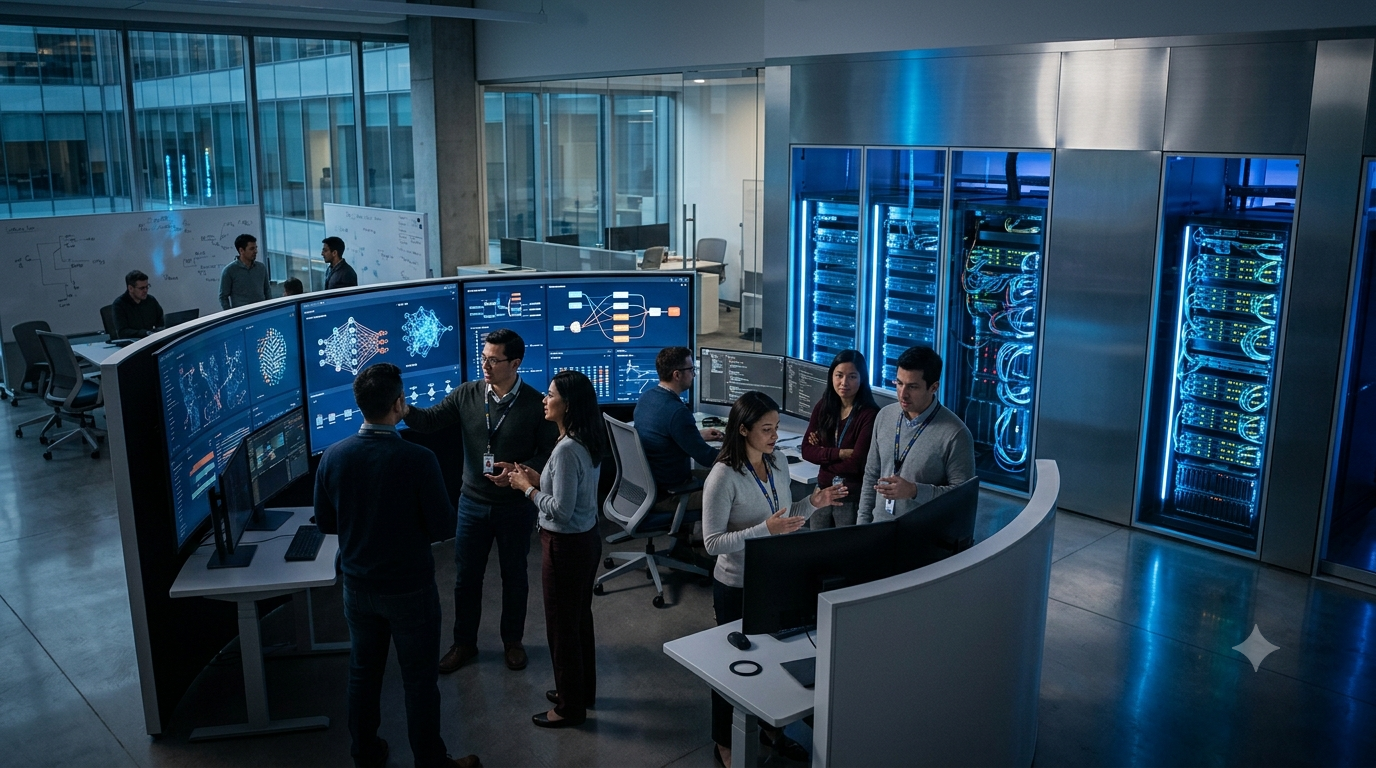
At Microsoft Build 2026, Mustafa Suleyman introduced the MAI lab and its new model family. The models cover diverse domains: reasoning, coding, image generation, transcription, and voice. This marks Microsoft’s most ambitious AI release since its partnership with OpenAI, signaling a move toward independence in frontier model development.
Why It Matters
- Strategic Independence: Microsoft is no longer dependent on external labs for model distillation.
- Enterprise-Grade Data: All models are trained on clean, commercially licensed datasets.
- Integration: Models are embedded into GitHub Copilot, VS Code, PowerPoint, and OneDrive.
- Developer Access: Available via Microsoft Foundry, OpenRouter, Fireworks, and Baseten.
Technical Details
The Seven Models
| Model | Domain | Key Specs | Integration |
|---|---|---|---|
| MAI-Thinking-1 | Reasoning | 35B active parameters, 256K context window | Foundry, Playground |
| MAI-Code-1-Flash | Coding | 5B parameters, inference-efficient | GitHub Copilot, VS Code |
| MAI-Image-2.5 | Image generation | Text-to-image + editing, Arena-leading scores | PowerPoint, OneDrive |
| MAI-Transcribe-1.5 | Speech-to-text | SOTA accuracy, 43 languages | Office Suite |
| MAI-Voice-2 | Text-to-speech | Natural voices, 15 languages | Microsoft 365 |
| MAI-Voice-2-Flash | TTS (efficient) | Lower cost, faster inference | Coming soon |
| MAI Frontier Tuning | Customization | Fine-tuning with enterprise privacy | Foundry |
Key Features
- Reasoning Power: MAI-Thinking-1 rivals Claude Opus 4.6 in benchmarks.
- Coding Efficiency: MAI-Code-1-Flash delivers agentic coding at lower cost.
- Image Generation: MAI-Image-2.5 surpasses competitors in design-ready outputs.
- Transcription Accuracy: MAI-Transcribe-1.5 leads in multilingual transcription.
- Voice Adaptability: MAI-Voice-2 can mimic voices from short samples.
Benefits
- Cost Efficiency: Smaller inference footprints make deployment practical.
- Scalability: Models optimized for enterprise and developer ecosystems.
- Customization: Frontier tuning allows businesses to fine-tune securely.
- Accessibility: Available across multiple platforms beyond Microsoft.
Limitations
- Medium-Sized Models: While efficient, they may not match the largest frontier models in raw scale.
- Preview Stage: Some models remain in private preview.
- Integration Bias: Deep Microsoft ecosystem integration may limit cross-platform neutrality.
Expert Analysis
Mustafa Suleyman emphasized the philosophy of “Humanist Superintelligence”—AI designed to amplify human potential rather than replace it. Analysts note Microsoft’s clean-data approach as a differentiator, positioning MAI models as more transparent and enterprise-ready compared to competitors
Industry Impact
- Enterprise AI: Stronger appeal to businesses needing compliance and transparency.
- Developer Ecosystem: Expanded access via OpenRouter and Baseten democratizes usage.
- Competitive Landscape: Microsoft positions itself against OpenAI, Anthropic, and Google DeepMind.
Who Should Care?
- Developers: For coding, image generation, and voice applications.
- Enterprises: For secure, customizable AI solutions.
- Educators & Researchers: For transcription and reasoning tasks.
- Content Creators: For image and voice synthesis.
Future Outlook
Microsoft projects a 1,000-fold increase in compute over the next three years, fueling more advanced models. The MAI lab is expected to expand into multimodal superintelligence, with broader integration across Microsoft’s productivity suite and cloud services
Conclusion
The Microsoft AI Models Series represents a strategic leap toward independence, transparency, and enterprise readiness. By focusing on clean data, efficiency, and integration, Microsoft is positioning itself as a leader in the next phase of AI development.
Key References
- Microsoft AI Blog – Launch Announcement (June 2, 2026) “Building a hill-climbing machine: Launching seven new MAI models” — official blog post introducing the MAI lab and its family of seven models, including MAI-Thinking-1, MAI-Code-1-Flash, MAI-Image-2.5, MAI-Transcribe-1.5, MAI-Voice-2, and MAI-Voice-2-Flash.
- Microsoft AI Blog – MAI-Thinking-1 Deep Dive (June 2, 2026) Detailed technical breakdown of MAI-Thinking-1, Microsoft’s flagship reasoning model, trained on clean, enterprise-grade data without distillation from third-party labs.
- Microsoft Build 2026 Keynote Transcript Mustafa Suleyman’s keynote introducing the MAI lab and the philosophy of “Humanist Superintelligence,” alongside the announcement of the seven new models.