
Table of Contents
Introduction
Google DeepMind stands as one of the most consequential research institutions in modern history. From solving decades-old biological challenges like protein folding to engineering multimodal foundation models that power global search engines and smartphones, the organization’s work sits at the foundation of the current artificial intelligence revolution.
Formed through the merger of two premier research divisions—DeepMind Technologies and Google Brain—Google DeepMind blends long-term fundamental scientific pursuit with world-scale engineering infrastructure. This article provides a comprehensive overview of Google DeepMind’s history, flagship models, commercial offerings, scientific breakthroughs, and competitive standing.
Mission Statement: “To build AI responsibly to benefit humanity.”
- Founded: 2010 (as DeepMind Technologies in London, UK)
- Acquired by Google: 2014 ($650M)
- Merger Date: April 2023 (Merged with Google Brain)
- Headquarters: London, United Kingdom (with hubs in Mountain View, Zurich, and Cambridge)
- Parent Company: Alphabet Inc.
- Leadership: Demis Hassabis (CEO & Co-founder), James Manyika (SVP of Research, Technology & Society), Jeff Dean (Chief Scientist)
History and Evolution
1. The Early Years & Reinforcement Learning (2010–2014)
Founded by Demis Hassabis, Shane Legg, and Mustafa Suleyman, DeepMind initially focused on deep reinforcement learning. By training systems to master retro Atari games directly from raw pixel input, the lab demonstrated that generalized intelligence was possible without hardcoded domain knowledge.
2. DeepMind Under Google (2014–2023)
Google acquired DeepMind in 2014. During this period, the lab achieved worldwide fame:
- AlphaGo (2016): Defeated world champion Go player Lee Sedol, achieving a breakthrough previously thought decades away.
- AlphaZero (2017): Generalized Go success to chess and shogi through self-play.
- AlphaFold (2020): Solved the 50-year-old “protein folding problem” in structural biology.
3. The Merger into Google DeepMind (2023–Present)
In response to rapid shifts in generative AI, Google combined its two premier AI groups—DeepMind and Google Brain (creators of the Transformer architecture in 2017). This unified org created a single pipeline running from basic scientific research directly into end-user products like Gemini.
| Product | Purpose | Launch Year | Primary Use Case |
| Gemini | Multimodal Foundation Model | 2023 | General intelligence, coding, reasoning, media processing |
| Gemma | Open-Weight Model Family | 2024 | Local execution, academic research, custom enterprise fine-tuning |
| AlphaFold | Biological Structure Prediction | 2018 | Accelerating drug discovery, molecular biology research |
| Project Astra | Universal AI Assistant | 2024 | Real-time audio-visual conversational reasoning |
| Veo | Generative Video Model | 2024 | High-definition text-to-video generation |
| Imagen | Text-to-Image Model | 2022 | High-fidelity image generation and editing |
| NotebookLM | Personal Knowledge Assistant | 2023 | Document analysis, automatic podcast generation |
| SynthID | AI Watermarking & Identification | 2023 | Content authenticity verification for text, audio, image, and video |
AI Models Architecture
The core of Google DeepMind’s product matrix consists of native multimodal foundation models designed to process text, audio, images, code, and video simultaneously.
- Gemini Nano: Highly efficient model optimized for on-device execution (smartphones, IoT, edge hardware) without cloud connectivity.
- Gemini Flash: Light, cost-efficient model engineered for high-frequency, low-latency tasks like document summary and dynamic web chat.
- Gemini Pro: Mid-tier workhorse handling complex multi-modal prompts, multi-file analysis, and advanced coding pipelines.
- Gemini Ultra / Deep Think: Flagship frontier models designed for high-level logical reasoning, advanced mathematics, competitive programming, and multi-step problem solving.
- Gemma: A family of lightweight, open-weight models built using the same research and infrastructure as Gemini, serving the open-source community.
- AlphaCode & AlphaTensor: Specialized non-consumer models; AlphaCode focuses on competitive-level software engineering, while AlphaTensor automates fundamental mathematical discoveries like matrix multiplication.
Key Research Areas
- Multimodal Reasoning: Processing and cross-referencing visual, acoustic, textual, and video context natively within a single transformer architecture.
- Embodied AI & Robotics: Applying multimodal foundation models to physical system control (e.g., RT-2, Gemini Robotics).
- Scientific Discovery: Leveraging deep learning to solve fundamental scientific challenges across molecular biology, materials science, and climate modeling.
- Reinforcement Learning & Planning: Combining large language models with search-based planning algorithms to enable self-correcting reasoning agents.
Major Breakthroughs
- AlphaGo (2016): Marked the end of brute-force game engines by introducing Monte Carlo Tree Search combined with deep neural networks.
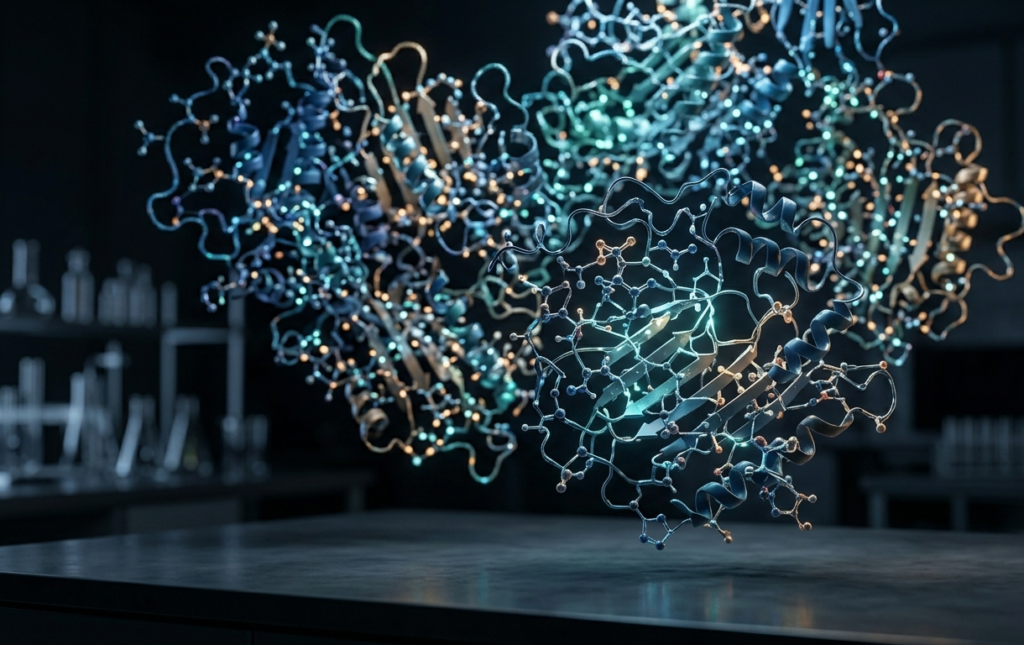
- AlphaFold (2020–2024): Predicted 3D structures for over 200 million proteins. Co-founder Demis Hassabis and researcher John Jumper were awarded the 2024 Nobel Prize in Chemistry for this achievement.
- Transformer Architecture (2017 – via Google Brain): Pioneered self-attention mechanisms in the landmark paper “Attention Is All You Need,” establishing the technical foundation for nearly all modern LLMs.
- Veo & Imagen Series: Brought generative media production to cinema-quality visual fidelity, incorporating direct native audio and physics simulation.
Enterprise Applications & Industries
Google DeepMind does not operate purely as a corporate lab; its research powers the entire Alphabet ecosystem (Google Cloud, Search, Workspace, Pixel, Android).
Key Industries
- Healthcare & Life Sciences: Accelerating drug discovery, identifying genetic variants, and enhancing diagnostic tools via AlphaFold and Med-Gemini.
- Software Development: Automated code completion, dynamic refactoring, and natural-language-to-app deployment through Vertex AI and Code Assist.
- Finance: Fraud prevention, document extraction, real-time risk simulation, and localized market analytics.
- Education & Research: Knowledge abstraction, multi-document synthesis, and personal tutoring via NotebookLM and Gemini Enterprise.
Advantages and Limitations
Key Advantages
- Full-Stack Compute & Infrastructure: DeepMind benefits directly from custom Google TPU (Tensor Processing Unit) clusters, allowing fast iteration and scale.
- Native Multimodality: Models are built ground-up to handle video, visual, text, and audio contexts without separate pipeline stitching.
- Scientific Depth: Unmatched record in fundamental scientific domains like biology, weather forecasting, and physics.
Current Limitations
- Enterprise Customization Delays: Navigating complex safety guardrails can sometimes delay experimental features from reaching public enterprise APIs.
- Open vs. Closed Model Friction: Balancing corporate IP protection (Gemini) with developer demands for open weights (Gemma) creates continuous strategic trade-offs.
Comparison with Competitors
| Company | Main Product | Core Strength | Primary Model Strategy |
| Google DeepMind | Gemini, Gemma | Native Multimodality, Scientific Breakthroughs, TPU Scale | Hybrid (Closed Frontier + Open Gemma) |
| OpenAI | ChatGPT, GPT-4o, o-series | First-mover consumer mindshare, developer ecosystem | Proprietary / Closed API |
| Anthropic | Claude | Alignment research, software engineering, enterprise safety | Proprietary / Closed API |
| Meta AI | Llama Series | Open-source dominance, community ecosystem | Fully Open Weights |
| Microsoft AI | Copilot | Deep OS and Office software integration | Strategic Enterprise Integration |
Future Roadmap & Emerging Initiatives
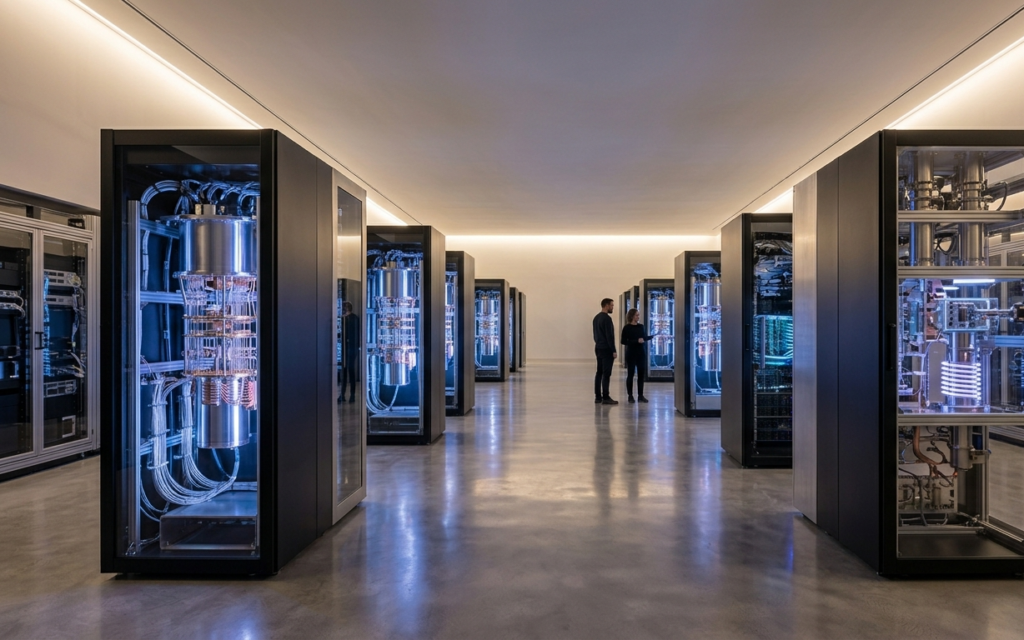
Looking ahead, Google DeepMind’s announced public roadmap focuses on three major pillars:
- Fully Autonomous Agentic AI: Shifting from passive conversational chat toward autonomous systems capable of executing multi-step long-horizon workflows across the web and operating systems.
- AI for Universal Science: Expanding AlphaFold principles into materials synthesis (GNoME), weather forecasting (GraphCast), and nuclear fusion containment control.
- Artificial General Intelligence (AGI) Safety: Developing robust, verifiable alignment frameworks and watermarking standards (SynthID) to ensure safe transitions as capabilities scale toward human-level systems.
Frequently Asked Questions (FAQs)
1. What is Google DeepMind?
Google DeepMind is Alphabet’s premier artificial intelligence research laboratory, formed by merging DeepMind and Google Brain in 2023.
2. Who founded DeepMind?
DeepMind was founded in London in 2010 by Demis Hassabis, Shane Legg, and Mustafa Suleyman.
3. What is the difference between Gemini and Gemma?
Gemini is Google DeepMind’s commercial family of multimodal models available via apps and APIs. Gemma is a family of lightweight, open-weight models designed for local developer installation and customization.
4. What is AlphaFold?
AlphaFold is an AI system developed by Google DeepMind that accurately predicts the 3D structures of proteins based on their amino acid sequences. Its creators were awarded the 2024 Nobel Prize in Chemistry.
5. Is Gemini free to use?
Yes, basic tiers of Gemini are accessible for free on web and mobile devices, while advanced compute models (like Gemini Advanced) require a subscription or paid API usage.
6. How does Google DeepMind differ from OpenAI?
While both build frontier models, DeepMind is integrated into Alphabet’s compute/cloud ecosystem and maintains a broader focus on fundamental scientific breakthroughs (e.g., biology, materials science) alongside consumer products.
7. What is Project Astra?
Project Astra is an initiative focused on developing real-time, multimodal visual and vocal AI assistants capable of perceiving and recalling physical surroundings in real time.
8. What infrastructure powers DeepMind models?
DeepMind models are trained and deployed on Google’s custom-designed AI hardware, known as Tensor Processing Units (TPUs).
Official References