


The frontier AI race rarely slows down, but July 2026 pushed even by its own standards. Within a single 30-day window, Anthropic, OpenAI, and Google DeepMind each shipped a major model update — and the comparison Claude Opus 5 vs GPT-5.6 vs Gemini 3.6 Flash has become the most-asked question among developers and enterprise buyers deciding where to put their API budget this quarter.
Quick answer: There’s no single winner. Claude Opus 5 is the strongest near-frontier value play, matching most of Anthropic’s flagship capability at half its price. GPT-5.6 gives developers the finest-grained cost control of the three, split across Sol, Terra, and Luna tiers. Gemini 3.6 Flash isn’t actually competing at flagship level at all — it’s Google’s fast, efficiency-focused workhorse, while Google’s real flagship, Gemini 3.5 Pro, remains delayed. The right model depends entirely on the job you’re pointing it at, which is exactly what this article breaks down.
This piece compares official pricing, published benchmarks, context windows, and real-world positioning for all three models, based entirely on what Anthropic, OpenAI, and Google have confirmed themselves — not rumors, leaks, or unverified leaderboard screenshots.
Table of Contents
Key Takeaways
- Claude Opus 5 ($5/$25 per million tokens) launched July 24, 2026, matching its predecessor’s price while nearly closing the gap to Anthropic’s flagship, Claude Fable 5.
- GPT-5.6 ($1–$5 input, $6–$30 output depending on tier) went generally available July 9, 2026, in three tiers — Sol, Terra, Luna — replacing OpenAI’s old “mini/nano” naming.
- Gemini 3.6 Flash ($1.50/$7.50 per million tokens) launched July 21, 2026, as Google’s efficiency-tier model — not its flagship, which remains delayed. All three models now sit around a 1-million-token context window, making that spec a rough parity point rather than a differentiator in 2026. Every benchmark figure below is vendor-reported. None has been independently reproduced across all three labs — test on your own workload before migrating.
A Month of Simultaneous Releases
Here’s the release timeline that makes this comparison possible in the first place:
- July 9, 2026 — OpenAI took GPT-5.6 to general availability across ChatGPT, Codex, and the API, shipping it in three tiers — Sol, Terra, and Luna — that split by capability and price rather than by model size, according to OpenAI’s official GPT-5.6 announcement.
- July 21, 2026 — Google DeepMind released Gemini 3.6 Flash alongside Gemini 3.5 Flash-Lite and a specialized cybersecurity model, Gemini 3.5 Flash Cyber, positioned as a limited-access pilot for governments and trusted partners, as reported by TechCrunch.
- July 24, 2026 — Anthropic released Claude Opus 5, which the company says surpasses all other models on its Frontier-Bench v0.1 coding evaluation and more than doubles the score of its predecessor, Opus 4.8, at a lower cost per task.
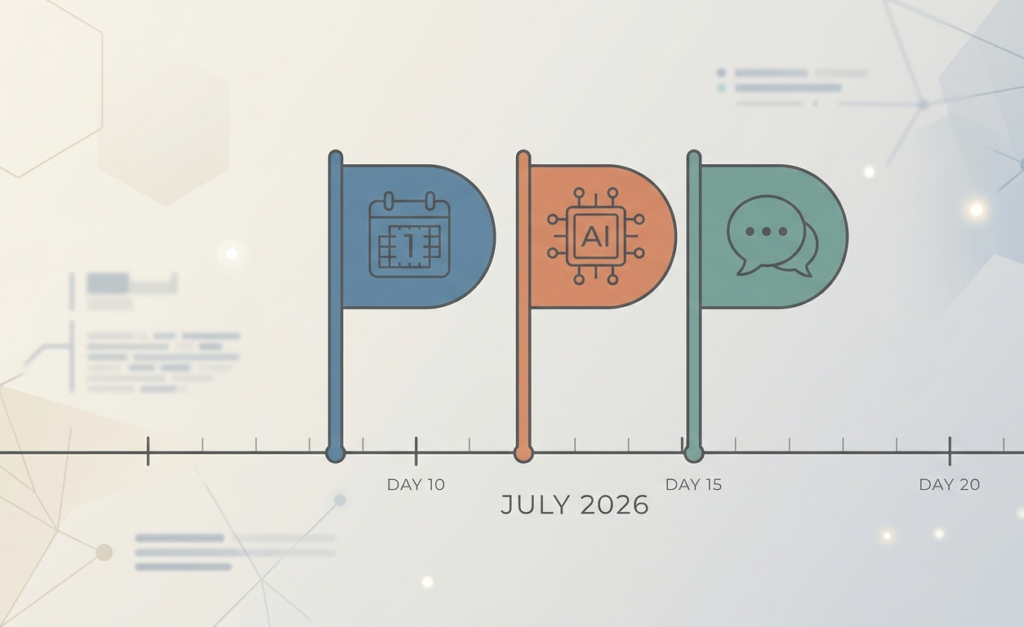
That’s three separate frontier-relevant launches inside 15 days. Before comparing them head-to-head, it’s worth being precise about what each release actually is — because one of the three isn’t a flagship model at all.
Why This Isn’t a Perfectly Even Fight
Claude Opus 5 and GPT-5.6 Sol are both flagship-tier releases. Each is positioned by its maker as the top-of-line option for demanding reasoning and agentic work. Gemini 3.6 Flash is different. It’s Google’s fast, cost-efficient workhorse tier — not its flagship.
Google’s actual next-generation flagship, Gemini 3.5 Pro, was delayed from its original June window. Reporting at the time linked the delay to Google scrapping the existing Gemini 2.5 Pro architecture for a complete ground-up rebuild targeting mathematical reasoning, SVG scene generation, and image quality. The model reportedly remained in partner testing as of late July, and Google’s flagship delay coincided with a high-profile researcher exodus to rival labs, adding pressure to an already-tight roadmap. So when Google shipped new models on July 21, it released three Flash-tier models rather than the long-awaited 3.5 Pro.
That distinction matters for this comparison. We’re including Gemini 3.6 Flash because it’s Google’s most recent, most relevant official release and the one most people will actually touch — but readers evaluating “Google’s best model” should understand they’re comparing a fast-tier workhorse against two flagship-class competitors. Keep that asymmetry in mind for every table below.
Pricing Comparison
All prices are per million tokens (input/output), as published by each company. Prices change without notice, so treat this table as a July 2026 snapshot and verify current rates directly on each vendor’s pricing page before budgeting a production workload.
| Model | Input Price | Output Price | Context Window | Max Output |
|---|---|---|---|---|
| Claude Opus 5 | $5.00 | $25.00 | 1,000,000 tokens | 128,000 (300K via Batch API) |
| GPT-5.6 Sol | $5.00 | $30.00 | ~1,050,000 tokens | 128,000 |
| GPT-5.6 Terra | $2.50 | $15.00 | ~1,050,000 tokens | 128,000 |
| GPT-5.6 Luna | $1.00 | $6.00 | ~1,050,000 tokens | 128,000 |
| Gemini 3.6 Flash | $1.50 | $7.50 | 1,048,576 tokens | 65,536 |
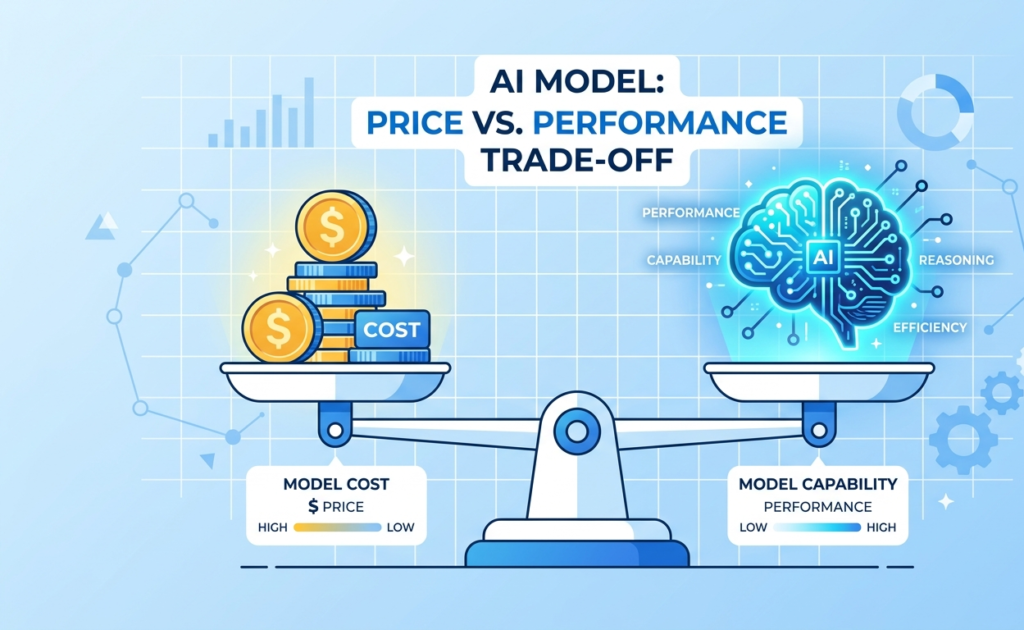
A few things stand out immediately. Claude Opus 5 launched at the same price as the model it replaced, Opus 4.8 — $5 input and $25 output per million tokens — while Anthropic’s actual flagship model, Claude Fable 5, costs roughly double that, at $10 input and $50 output. That positions Opus 5 as Anthropic’s near-frontier value play: most of the capability, half the flagship price.
GPT-5.6’s three-tier structure gives OpenAI the widest pricing spread of any single release — a 5x gap between Sol and Luna on both input and output pricing, confirmed on OpenAI’s developer pricing documentation. Gemini 3.6 Flash undercuts GPT-5.6 Sol and Claude Opus 5 on raw token price, which makes sense given it isn’t competing in the same tier — but it’s worth noting Gemini 3.6 Flash’s output price is still slightly higher than GPT-5.6 Luna’s, despite both targeting cost-sensitive workloads.
Claude Opus 5 vs GPT-5.6 vs Gemini 3.6 Benchmark Comparison
Direct benchmark comparisons across labs are always somewhat apples-to-oranges, since each company runs and reports its own evaluation suites. With that caveat, here’s what each lab has published for agentic coding performance — the closest thing to a shared reference point across all three releases.
| Model | Agentic Coding Benchmark | Score |
|---|---|---|
| Claude Opus 5 | Frontier-Bench v0.1 (max effort) | 43.3% |
| Claude Fable 5 | Frontier-Bench v0.1 | 33.7% |
| GPT-5.6 Sol | Frontier-Bench v0.1 | 37.5% |
| GPT-5.6 Sol | Terminal-Bench 2.1 | 88.8% (91.9% in Ultra mode) |
| GPT-5.6 Terra | Terminal-Bench 2.1 | 87.4% |
| GPT-5.6 Luna | Terminal-Bench 2.1 | 84.7% |
| Gemini 3.6 Flash | Terminal-Bench 2.1 | 78.0% |
| Gemini 3.6 Flash | SWE-Bench Pro | 58.7% |
Anthropic reports, via MarkTechPost’s coverage of the Opus 5 launch, that on Frontier-Bench v0.1 — a 74-task successor to Terminal-Bench 2.1 — Opus 5 scored 43.3% at max effort against 18.7% for Opus 4.8, 33.7% for Fable 5, and 37.5% for GPT-5.6 Sol. That’s a notable claim: Anthropic’s mid-flagship model outscoring OpenAI’s top-tier model, and even Anthropic’s own more expensive flagship, on this particular test. Worth stressing: this is Anthropic’s own benchmark, run on Anthropic’s own infrastructure, and it hasn’t been independently reproduced across labs at time of writing.
Meanwhile, independent tracking from Trilogy AI’s GPT-5.6 benchmark analysis notes that on Terminal-Bench 2.1, Sol scores 88.8%, Sol Ultra 91.9%, Terra 87.4%, and Luna 84.7%, compared with 78.9% for Claude Opus 4.8 and 83.1% for Claude Fable 5 — figures gathered before Opus 5’s release, so treat any Opus 5 comparison against these numbers as directional only.
For long-horizon professional work, OpenAI leans on a benchmark it built specifically for this release: GPT-5.6 Sol at max reasoning effort sets a new state of the art on Agents’ Last Exam at 53.6, beating Claude Fable 5 by more than 13 points, with all three GPT-5.6 tiers reportedly beating every non-OpenAI model listed.
Gemini 3.6 Flash tells a different story, since it isn’t chasing flagship-tier scores at all. Google reports the model scoring 50 on the Artificial Analysis Intelligence Index — matching its predecessor, Gemini 3.5 Flash — while using around 17% fewer output tokens across the benchmark suite and completing tasks faster overall. In other words: Google didn’t primarily chase a bigger intelligence number this cycle. It chased efficiency. Average task completion time reportedly fell from 2.7 minutes to 1.3 minutes, and long-context retrieval accuracy jumped sharply on GDM-MRCR v2, from 77.3% to 91.8% at the 128K-token mark.
Context Window and Knowledge Cutoff
| Model | Context Window | Knowledge Cutoff |
|---|---|---|
| Claude Opus 5 | 1,000,000 tokens | May 2026 |
| GPT-5.6 (all tiers) | ~1,050,000 tokens | Not independently confirmed at publication |
| Gemini 3.6 Flash | 1,048,576 tokens | March 2026 |
All three now sit around the one-million-token mark, which has effectively become the baseline for frontier and near-frontier models in mid-2026. Claude Opus 5’s May 2026 knowledge cutoff is the most current of any Claude model — four months ahead of both Claude Fable 5 and Claude Sonnet 5, which sit at January 2026. Gemini 3.6 Flash moved its cutoff forward to March 2026, up from January 2025 on the prior Flash generation — a substantial jump that should meaningfully reduce the need to paste in recent library or API documentation when working with either model.
Why this matters practically: a more recent knowledge cutoff means fewer manual corrections when a model references a deprecated library version, an old pricing tier, or a superseded API — a real, if unglamorous, source of developer time savings.
Safety and Enterprise Considerations
Enterprise buyers evaluating these models for production use should weigh more than raw benchmark scores.
Anthropic reports that on the Gray Swan indirect prompt injection benchmark, attacker success within 15 attempts fell from 5.5% on Opus 4.8 to 2.0% on Opus 5, and in browser environments run through Claude Cowork, attack success dropped to 3.70% with no safeguards applied and to 0% across all 129 environments with auto mode enabled. Opus 5 is also not subject to the 30-day data retention policy that applies to Claude Fable 5, and Anthropic describes it as the company’s most aligned model to date.
Anthropic also introduced beta support for mid-conversation tool changes and automatic API fallbacks alongside the Opus 5 launch — features aimed squarely at teams running long, complex agent workflows in production.
On the OpenAI side, GPT-5.6’s rollout followed a government safety review under a voluntary framework tied to a June 2026 White House AI cybersecurity order, though a White House official told CNBC the administration did not give OpenAI a formal “green light” and that release decisions “rest entirely with the companies.” OpenAI CEO Sam Altman framed the trade-off directly: broad access to powerful models requires confidence in safety claims. Separately, enterprise buyers today are scrutinizing AI spend more closely than ever — part of the logic behind Terra’s discounted pricing.
Where Grok 4.5 and Kimi K3 Fit In
No frontier comparison in July 2026 is complete without acknowledging two other releases pressuring this market from the outside. SpaceXAI’s Grok 4.5 launched July 8 as what Elon Musk called an “Opus-class model” — faster and more token-efficient than a true flagship, occupying roughly the same value tier as GPT-5.6 Terra and Claude Opus 5. And Moonshot AI’s Kimi K3, a 2.8-trillion-parameter open-weight model, arrived with a public benchmark score that reportedly edged out Grok 4.5 on independent intelligence testing — a reminder that the three labs compared in this article aren’t operating in a vacuum. If your evaluation includes open-weight or self-hosted options, Kimi K3 and Grok 4.5 deserve a seat at the same comparison table; we cover both in more depth in our companion piece on open-weight frontier models.
Winner by Category
| Use Case | Best Choice | Why |
|---|---|---|
| Best raw agentic coding score (vendor-reported) | Claude Opus 5 | Leads Frontier-Bench v0.1 at 43.3%, ahead of GPT-5.6 Sol’s 37.5% |
| Best price-to-performance for production coding | GPT-5.6 Terra | Near-GPT-5.5 performance at roughly half of Sol’s price |
| Lowest cost per token overall | GPT-5.6 Luna | $1/$6 per million tokens, the cheapest tier across all three releases |
| Best long-context retrieval | Gemini 3.6 Flash | GDM-MRCR v2 accuracy jumped from 77.3% to 91.8% at 128K tokens |
| Freshest knowledge cutoff | Claude Opus 5 | May 2026, four months ahead of Fable 5 and Sonnet 5 |
| Strongest published safety posture | Claude Opus 5 | Prompt-injection attack success down to 2.0%, zero data retention available |
| Best native multimodal input | Gemini 3.6 Flash | Accepts text, image, audio, video, and PDF input natively |
Which Model Should You Actually Use?
Rather than crowning one universal winner, it’s more useful to match the model to the job.
For everyday coding and production agent workloads
Best pick: GPT-5.6 Terra
- ✅ OpenAI positions Terra as delivering GPT-5.5-class performance at roughly half the cost of Sol
- ✅ Independent trackers note it beats the prior GPT-5.5 flagship on several benchmarks at that lower price
- ❌ Not the ceiling — teams needing maximum reasoning depth should still benchmark against Sol or Opus 5
For frontier-level reasoning and agentic coding where correctness matters most
Best pick: Claude Opus 5 or GPT-5.6 Sol
- ✅ Both are genuine flagship-tier contenders, unlike Gemini 3.6 Flash
- ✅ Anthropic still recommends its own Claude Fable 5 for the most advanced, long-horizon autonomous work, but Opus 5 is pitched as getting within striking distance of that ceiling at roughly half the cost
- ❌ Worth testing directly against Sol on your own workload rather than trusting either lab’s internal numbers alone
For high-volume, latency-sensitive, or cost-constrained tasks
Best pick: GPT-5.6 Luna or Gemini 3.6 Flash
- ✅ Both undercut the flagship tiers substantially on price
- ❌ Gemini 3.6 Flash actually costs more per output token than GPT-5.6 Luna at public API rates
- ✅ Gemini’s long-context retrieval gains and native multimodal input may matter more than raw price for certain workloads
For long-context, document-heavy, or multimodal work
Best pick: Gemini 3.6 Flash
- ✅ Its jump in long-context retrieval accuracy stands out here, alongside its broad multimodal input support
- ❌ Still not chasing a flagship intelligence score this cycle — pair with a stronger model if the task also demands deep reasoning
The Bottom Line
No single model “won” July 2026 outright — and that’s arguably the more important story. Anthropic, OpenAI, and Google are no longer just racing to the biggest headline benchmark number. They’re increasingly competing on price-per-task, safety posture, context handling, and how well a model fits a specific production workload. Claude Opus 5 makes the strongest case for near-frontier capability at a controlled price. GPT-5.6’s three-tier system gives developers the most granular control over the cost-capability trade-off of any release this cycle. Gemini 3.6 Flash, while not Google’s true flagship answer, shows a lab optimizing hard for efficiency and long-context reliability while its actual next-generation flagship remains in the wings.
The practical takeaway: test against your own workload before committing. Vendor-reported benchmarks — even when honestly presented — are directional, not universal truths, and the gap between “best on paper” and “best for your use case” has rarely been wider than it is right now.
How we verified this comparison: Every pricing and benchmark figure in this article was checked against official company announcements, pricing documentation, or model cards from Anthropic, OpenAI, and Google DeepMind, cross-referenced with independent trackers where noted. Where a claim is vendor-reported and not independently reproduced, we say so explicitly rather than presenting it as settled fact. This article will be updated as Gemini 3.5 Pro ships and as independent benchmarks become available.
Frequently Asked Questions
1. What is Claude Opus 5? Claude Opus 5 is Anthropic’s near-frontier model released July 24, 2026, priced at $5/$25 per million input/output tokens and positioned as the default model on Claude Max.
2. When was GPT-5.6 released? GPT-5.6 reached general availability on July 9, 2026, across ChatGPT, Codex, and the OpenAI API.
3. When was Gemini 3.6 Flash released? Google DeepMind released Gemini 3.6 Flash on July 21, 2026, alongside Gemini 3.5 Flash-Lite and Gemini 3.5 Flash Cyber.
4. Is Gemini 3.6 Flash Google’s flagship model? No. Gemini 3.6 Flash is a fast, cost-efficient workhorse-tier model. Google’s next flagship, Gemini 3.5 Pro, was delayed and remained in partner testing at the time of this comparison.
5. How much does Claude Opus 5 cost? Claude Opus 5 is priced at $5 per million input tokens and $25 per million output tokens — the same rate as its predecessor, Opus 4.8.
6. How much does GPT-5.6 cost? GPT-5.6 Sol costs $5/$30 per million tokens, Terra costs $2.50/$15, and Luna costs $1/$6, all per million input/output tokens.
7. How much does Gemini 3.6 Flash cost? Gemini 3.6 Flash is priced at $1.50 per million input tokens and $7.50 per million output tokens.
8. What is the context window on Claude Opus 5? Claude Opus 5 has a 1,000,000-token context window as both the default and maximum, with 128,000-token max output on the standard API.
9. What is the context window on GPT-5.6? All three GPT-5.6 tiers share roughly a 1.05-million-token context window with up to 128,000 tokens of output.
10. What is the context window on Gemini 3.6 Flash? Gemini 3.6 Flash has a 1,048,576-token context window with a maximum output of 65,536 tokens.
11. Which model is best for coding? Claude Opus 5 leads on Anthropic’s own Frontier-Bench v0.1 evaluation, while GPT-5.6 Sol Ultra leads on Terminal-Bench 2.1. Results vary by benchmark, so test both against your own codebase.
12. Is Claude Opus 5 better than Claude Fable 5? By Anthropic’s own reporting, Opus 5 comes within 0.5% of Fable 5 on CursorBench 3.2 at roughly half the cost, though Anthropic still designates Fable 5 as its most capable model overall.
13. What is the knowledge cutoff for Claude Opus 5? May 2026 — the most recent cutoff of any current Claude model.
14. What is the knowledge cutoff for Gemini 3.6 Flash? March 2026, up from January 2025 on the previous Gemini 3.5 Flash.
15. What are GPT-5.6 Sol, Terra, and Luna? They are three distinct capability tiers within the GPT-5.6 family — Sol is the flagship, Terra is a balanced mid-tier model, and Luna is the fastest, cheapest tier.
16. Why did OpenAI change its model naming convention? OpenAI says the generation number identifies the model’s release cycle, while Sol, Terra, and Luna identify durable capability tiers that can advance independently over time.
17. Did the U.S. government approve GPT-5.6’s release? OpenAI conducted a voluntary safety review with government partners, but a White House official said the administration did not give formal approval and that release decisions rest with the company.
18. Is Gemini 3.5 Pro released yet? As of this article, Gemini 3.5 Pro remained in partner testing after Google delayed its release to rebuild the model’s architecture from scratch.
19. What is GPT-Live? GPT-Live is OpenAI’s full-duplex voice model, released July 8, 2026, designed to power more natural, real-time conversations in ChatGPT Voice.
20. Which model offers the best price-to-performance ratio for high-volume tasks? GPT-5.6 Luna is positioned specifically for this use case, offering the lowest per-token pricing in the GPT-5.6 family while remaining competitive on benchmark scores.
21. Does Claude Opus 5 support zero data retention? Yes. Unlike Claude Fable 5, which requires a 30-day data retention window, Opus 5 supports zero data retention.
22. Which model has the largest context window? All three models — Claude Opus 5, GPT-5.6, and Gemini 3.6 Flash — now offer roughly one-million-token context windows, making this a rough parity point rather than a differentiator.
23. Is Gemini 3.6 Flash cheaper than GPT-5.6? It depends on the tier. Gemini 3.6 Flash undercuts GPT-5.6 Sol and Terra but costs slightly more per output token than GPT-5.6 Luna.
24. What replaced Claude Opus 4.8? Claude Opus 5 replaced Claude Opus 4.8 as Anthropic’s mid-flagship model, shipping at the same price point.
25. Should enterprises switch models based on this comparison alone? No. All figures here are vendor-reported and not independently reproduced across labs. Enterprises should benchmark candidate models against their own specific workloads before migrating.
26. How does Grok 4.5 compare to Claude Opus 5 and GPT-5.6? Grok 4.5 targets the same value tier as GPT-5.6 Terra and Claude Opus 5, with xAI describing it as an “Opus-class model” that is faster and more token-efficient than a true flagship offering.
27. Is Kimi K3 relevant to this comparison? Kimi K3 is a 2.8-trillion-parameter open-weight model from Moonshot AI that reportedly outperformed Grok 4.5 on independent intelligence benchmarks, making it a relevant option for teams considering self-hosted or open-weight alternatives to the three proprietary models compared here.
28. Will this comparison be updated? Yes. This article will be revised once Gemini 3.5 Pro reaches general availability and as independent, cross-lab benchmark results become available.
Official Reference Links
- Anthropic — Introducing Claude Opus 5
- Anthropic — Claude Platform Pricing
- OpenAI — Introducing GPT-Live
- Google DeepMind — News and Model Updates
- TechCrunch — Google releases three new Gemini models — but no 3.5 Pro