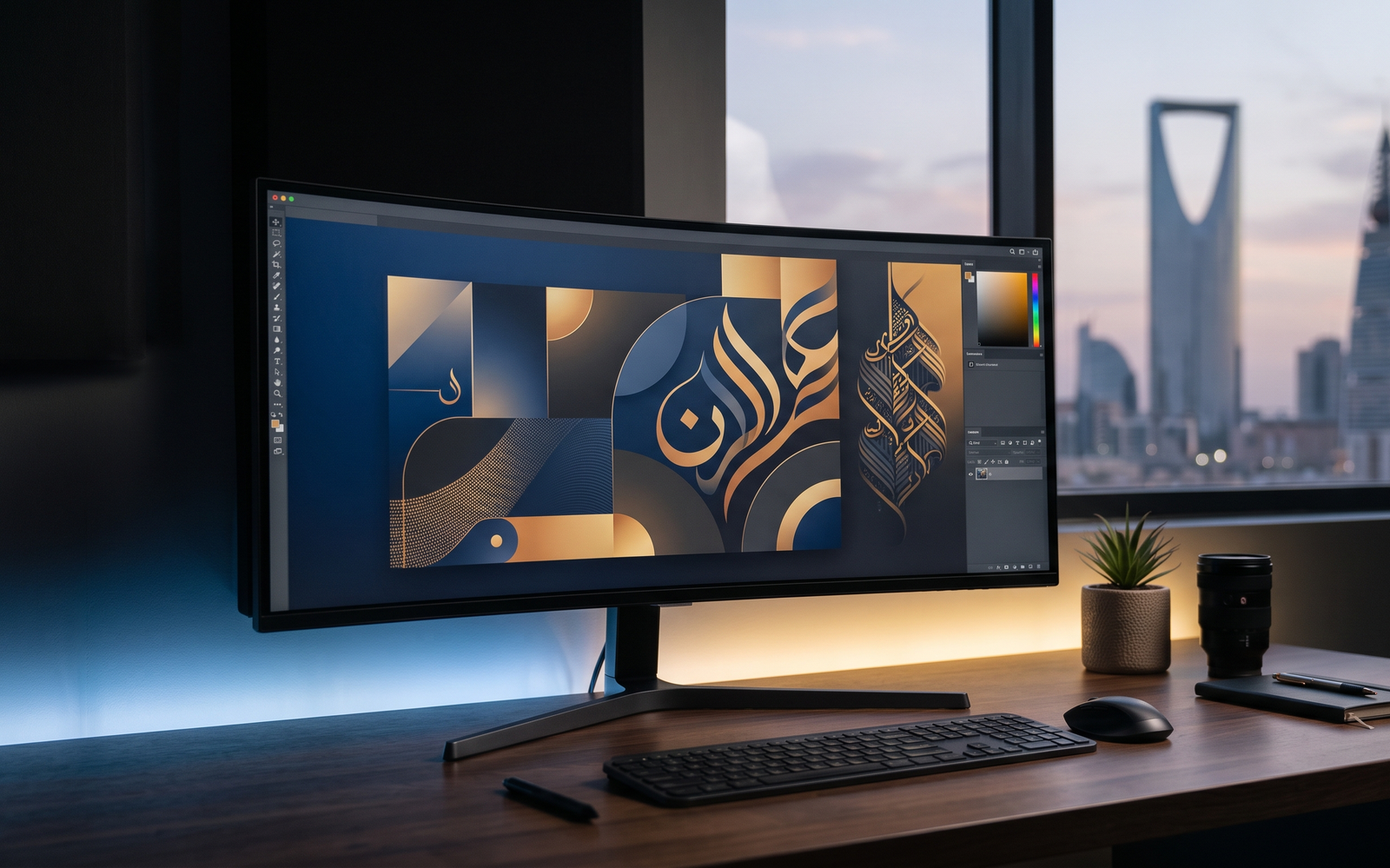
Luma AI says it will give its AI creative platform a fully native Arabic interface later in 2026 — a change that goes beyond letting users type prompts in Arabic and instead rebuilds the software’s menus, navigation, and workflow tools in the language itself.
The company announced the plan on September 2, 2026, at LEAP 2026, Saudi Arabia’s flagship technology conference held in Riyadh from August 31 to September 3. Jason Day, Luma AI’s Head of EMEA, unveiled the update, describing it as the result of a year spent working directly with creative professionals and enterprises in the Kingdom. Once released, it will be the first non-English interface Luma has ever shipped for Luma Agents, its unified AI creative platform for generating and editing video, images, and other creative assets.
That distinction — interface localization, not just language support — is the substance of the news. Luma Agents already lets users write prompts in Arabic and produces Arabic-language creative output today. What’s new is a promise to translate the software itself: the menus a designer clicks through, the labels on workflow tools, the navigation that structures a project from first idea to finished asset.
Table of Contents
What Luma AI Announced
According to Luma’s own announcement, the localized interface will “begin rolling out later this year,” with the company saying more details will be published on its website closer to launch. No specific month, quarter, or release window has been given beyond that.
Day framed the update as community-driven rather than purely technical. “The process of localizing the interface has been guided by the creative community, for the creative community in the Kingdom,” he said, adding that Arabic is spoken by roughly 400 million people worldwide and that the goal is to let creators move from initial idea to finished project without switching between languages.
Luma describes the coming release as “the first-of-its-kind creative intelligence platform in Arabic” built for creative communities in Saudi Arabia and the broader Middle East and North Africa region. That is a claim from the company, not an independently verified industry first — worth noting given how crowded the AI creative-tools market has become. Still, it lines up with what’s visible across the market today: no evidence has surfaced that Runway, Pika, Kling, Sora, or Adobe currently offer a native Arabic user interface, even though several of them already accept Arabic-language prompts.
What’s Different From Today
It’s worth being precise about the baseline, because it’s easy to conflate two different things. Luma Agents can already understand Arabic prompts and generate Arabic-language output — that capability exists now and isn’t new. What Luma announced in September is a separate, additional layer: translating the interface a user actually navigates, not just the content they type into it or receive back.
This is a meaningful technical and design undertaking. Localizing an interface means adapting menus, buttons, workflow labels, and navigation logic — including right-to-left text handling, which Arabic requires and English-first software often has to be substantially reworked to support properly. Luma has not published technical details about how it’s approaching that work, so specifics of the implementation remain unknown for now.
One thing Luma has not said anything about: whether technical support and documentation will also be translated into Arabic. The announcement is scoped explicitly to the “total user experience” of navigation, menus, and workflow tools — it makes no mention of help centers, support tickets, or written guides. That’s a gap worth watching as the launch approaches.
Why It Matters — Saudi Arabia’s Creative-AI Push
Luma’s announcement lands inside a broader Saudi effort to build out AI and creative-technology industries under Vision 2030. The Kingdom has run GAIA, a generative AI startup accelerator, since it launched in Riyadh in May 2023. Separately, a program called Nama’ — run jointly with the Ministry of Culture and the Saudi Data and AI Authority — offers cultural-sector small and medium-sized businesses incentives of up to SR500,000 (about $133,000) to adopt or develop AI technologies. LEAP itself, the conference where Luma made its announcement, is backed by the Ministry of Communications and Information Technology, the Saudi Federation for Cybersecurity, Programming and Drones, and the events company Tahaluf.
None of these programs has been confirmed as directly connected to Luma’s Arabic interface plan. But they illustrate the kind of national push — funding, accelerators, and incentives aimed at AI-driven creative industries — that Luma’s Saudi expansion is moving alongside.
The Saudi Relationship Behind the Announcement
This announcement didn’t happen in isolation. It’s the latest step in roughly a year of escalating ties between Luma AI and Saudi Arabia’s state-backed AI ecosystem.
The relationship’s clearest marker came in November 2025, when Luma AI raised $900 million in a Series C funding round led by HUMAIN, an artificial intelligence company owned by Saudi Arabia’s Public Investment Fund. The round, which also included AMD Ventures and existing investors Andreessen Horowitz, Amplify Partners, and Matrix Partners, pushed Luma’s valuation above $4 billion, according to CNBC. As part of the deal, Luma and HUMAIN agreed to build Project Halo, a 2-gigawatt AI supercluster in Saudi Arabia — described at the time as one of the largest computing infrastructure buildouts in the world, with Luma as a primary customer.
Three months later, in February 2026, Luma announced it would open a regional headquarters in Riyadh, framed as a hub for client engagement, partnerships, and advanced AI development. The company said it planned to hire locally across engineering, go-to-market, and forward-deployed creative and technical roles. The same announcement revealed that Publicis Groupe Middle East had named Luma its preferred generative AI technology partner across the MENA region — a deal that gives Luma a direct channel into agency-scale advertising and creative production work across the region.
In May 2026, Luma opened access to Uni-1.1, an API offering production-grade image generation with native Arabic-language rendering, aimed at developers, broadcasters, advertising agencies, and content studios across the Gulf and wider MENA region. Luma said the model addresses what it called a longstanding weakness among Western AI image models: producing culturally accurate Arabic-language visuals rather than garbled or misrendered script.
Seen against that backdrop, the Arabic interface for Luma Agents reads less like a standalone feature and more like the next visible product to come out of an already-financed strategic bet. HUMAIN has also described its broader ambition to help build what it calls the world’s first Saudi-built, Arabic-native foundation model, to be deployed through its HUMAIN Create initiative — an effort separate from, but related to, this interface localization work.
How Luma Compares to Competitors
Arabic-language capability in AI creative tools isn’t entirely new — but there’s a real difference between a tool that can read an Arabic prompt and one whose interface is built for Arabic speakers.
Publicly available comparisons of major AI video and image tools indicate that Luma, Runway, Kling, Pika, and Hailuo can all accept prompts written in Arabic and other non-English languages, since prompt interpretation runs through underlying language models rather than English-only keyword matching. That’s simply a byproduct of how modern generative AI works, and it isn’t unique to any one platform.
What appears to set Luma’s announcement apart is the interface layer itself. Based on the information available, none of the named competitors currently offer a fully localized Arabic user interface — the menus, navigation, and workflow tools that structure how a person actually uses the software day to day. That’s not proof no one else is working on something similar, only that no public evidence of it currently exists.
It’s also worth noting that one of the named competitors, OpenAI’s Sora, is in the process of being wound down rather than expanded. OpenAI discontinued the Sora web and app experiences on April 26, 2026, and its API access is scheduled to close on September 24, 2026 — meaning it’s a shrinking presence in the market rather than an active rival at the time of this announcement.
| Platform | Accepts Arabic prompts | Native Arabic interface |
|---|---|---|
| Luma AI (Luma Agents) | Yes | Planned, not yet released |
| Runway | Yes (via underlying language model) | No public evidence found |
| Kling AI | Yes (via underlying language model) | No public evidence found |
| Pika | Yes (via underlying language model) | No public evidence found |
| OpenAI Sora | Yes, while active | No public evidence found; product being discontinued |
| Adobe | Not verified | No public evidence found |
Table reflects publicly available information as of this writing and should not be read as a comprehensive or independently audited comparison.
What’s Still Unconfirmed
Several important details remain open, and Luma has not addressed them publicly:
- No specific launch date. “Later this year” is the only timing Luma has given. There’s no confirmed month or quarter.
- No word on support and documentation. The announcement covers the interface itself — menus, navigation, workflow tools — but says nothing about whether customer support or written documentation will be offered in Arabic.
- No independent quality benchmarking. Luma’s claims about its existing Arabic prompting and output — and by extension, expectations for the new interface — are company statements. No independent testing of Arabic-language performance was found.
- No published market-share data. There is no publicly available figure showing how much of the MENA creative-AI market Luma AI holds relative to Runway, Kling, Pika, or others. Any comparison of relative popularity in the region should be treated as unverified.
Timeline
- November 19, 2025 — Luma AI raises $900 million in a Series C round led by HUMAIN, valuing the company above $4 billion; the two companies announce Project Halo, a 2-gigawatt AI supercluster in Saudi Arabia.
- February 11, 2026 — Luma AI announces a regional headquarters in Riyadh and a new partnership naming it Publicis Groupe Middle East’s preferred generative AI technology partner.
- May 13, 2026 — Luma opens access to Uni-1.1, an API with native Arabic-language image generation for MENA developers and enterprises.
- August 31–September 3, 2026 — LEAP 2026 takes place in Riyadh.
- September 2, 2026 — Luma AI announces a fully native Arabic interface for Luma Agents, to launch later in 2026.
What This Means Now
The evidence supports a clear, if incomplete, picture: Luma AI has made a specific, public commitment to localize its Luma Agents interface into Arabic, building on real Arabic-language capability that already exists and real financial and infrastructure commitments already made with Saudi Arabia’s HUMAIN. That much is verifiable.
What isn’t yet verifiable is execution. There’s no confirmed release date, no detail on whether support will follow the interface into Arabic, and no independent data on how the localized product will actually perform for Arabic-speaking creatives once it ships. The announcement is a statement of intent from a company that has, over the past year, backed similar intentions with real capital and infrastructure — but it is still a promise rather than a delivered product.
The next milestones to watch are straightforward: whether Luma names an actual launch date as 2026 progresses, whether it says anything about support and documentation, and whether any independent reviewers test the Arabic interface once it’s available.
Frequently Asked Questions
What exactly is Luma AI launching in Arabic? A fully native Arabic-language interface for Luma Agents — meaning the platform’s menus, navigation, and workflow tools will be translated, not just prompt input and generated output.
When will the Arabic interface for Luma Agents be available? Luma has said only that it will roll out “later this year” (2026). No specific date has been announced.
Does Luma Agents already work in Arabic today? Yes, in part. Luma Agents currently supports Arabic-language prompting and produces Arabic-language creative output. The interface itself — menus and navigation — is still in English until the new update ships.
What is Luma AI’s relationship with HUMAIN and Saudi Arabia? HUMAIN, an AI company owned by Saudi Arabia’s Public Investment Fund, led a $900 million Series C investment in Luma AI in November 2025. The two companies are also building a 2-gigawatt AI supercluster called Project Halo, and Luma has since opened a regional headquarters in Riyadh and formed a partnership with Publicis Groupe Middle East.
Is Luma AI the first AI creative platform with a native Arabic interface? Luma describes it that way, and no public evidence was found of a competitor currently offering one. However, this is a claim from the company, not an independently confirmed industry first.
Will Luma AI’s customer support and documentation also be in Arabic? That hasn’t been confirmed. Luma’s announcement addresses the interface itself but does not mention support or documentation.
How does this fit into Saudi Arabia’s broader AI strategy under Vision 2030? Saudi Arabia has made AI and the creative economy priorities under Vision 2030, including programs like the GAIA generative AI accelerator and cultural-sector AI incentives run with the Ministry of Culture and the Saudi Data and AI Authority. Luma’s Arabic interface is not confirmed to be directly connected to these specific government programs, but it fits the same broader national push toward AI-driven creative industries.